Protecting Mount Shasta's Land: Showing Up Works!
From Crystal Geyser to today’s forest battles, local people have made a difference—and we can do it again. Here's how.
By Anastasia Sprout | Mount Shasta Observer
If you care about Mount Shasta’s forests, water and the wild places that make this region so special, there are some BIG decisions happening right now that deserve our attention.
California voters are being asked to change parts of our environmental review laws (Prop. 45). The federal government is reconsidering protections for roadless National Forest lands (Roadless Rules). Congress is debating legislation designed to "speed up" forest management (Fix Our Forests).
Behind these items are simple questions: Who gets to decide what happens to our forests and water? How carefully do they have to study the consequences first? And how much power do ordinary citizens have to say NO? Or at least – "Let's think this through and add some common sense before acting."
Fortunately, Mount Shastans already have significant experience with this.
Remember Crystal Geyser?
Most residents will remember the fight over Crystal Geyser’s proposed bottling operation at the old Coca-Cola plant.
Local citizens organized through W.A.T.E.R.—We Advocate Thorough Environmental Review and worked alongside the Winnemem Wintu Tribe and others concerned about protecting this area’s water and environment.
They read environmental documents, went to meetings, submitted comments, raised money, brought in experts and, when necessary, went to court.
In 2022, their cases reached the California Court of Appeal, where they prevailed on important environmental-review issues.
And this year, an inquiry about potentially using the former Crystal Geyser property for an AI data center triggered another rapid local response, including a large petition and signs that still remain around town.
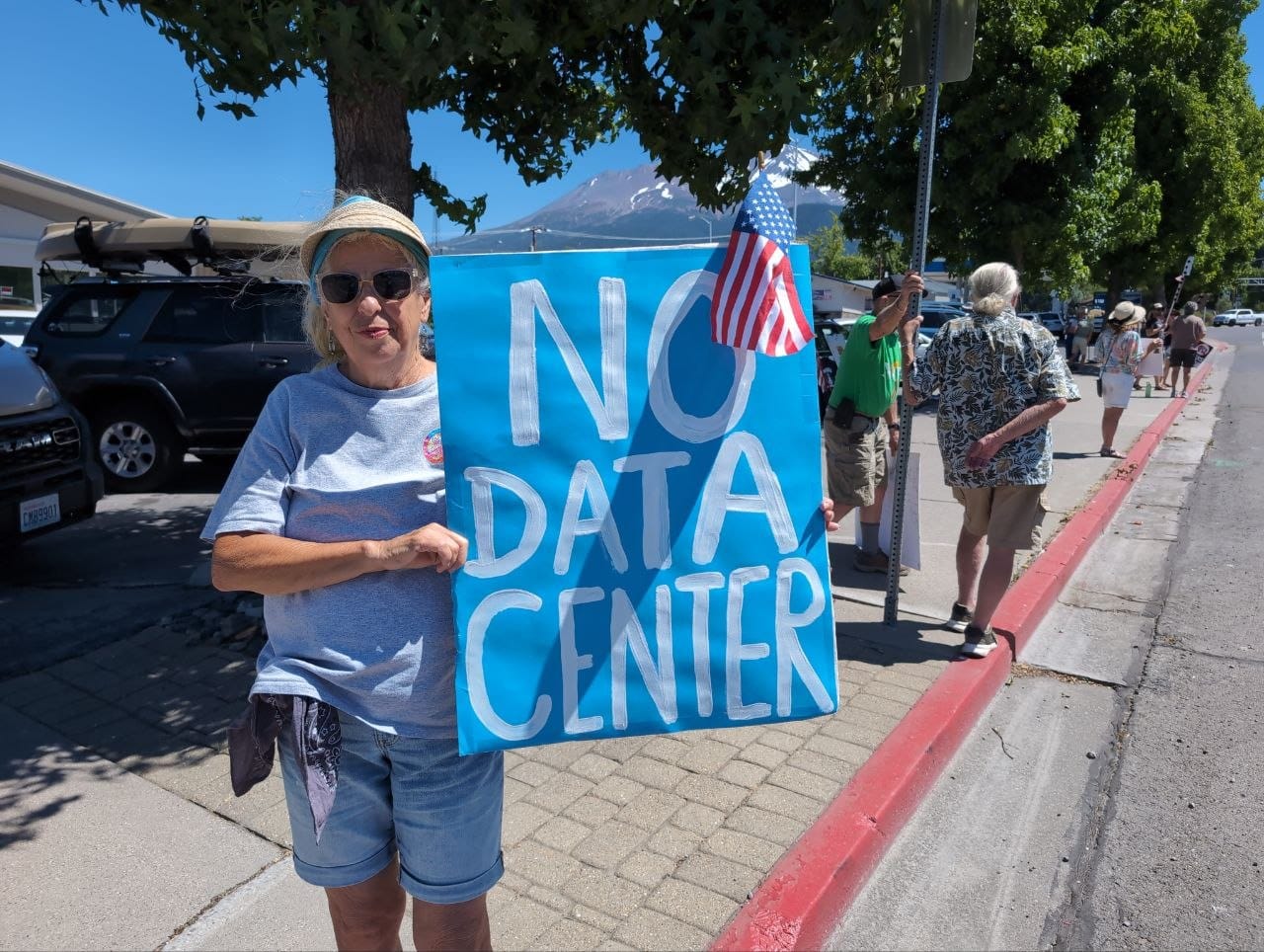
That history matters today because some of the same laws and protections those citizens used are now being reconsidered or changed.
CEQA What?
CEQA stands for the California Environmental Quality Act.
Basically, before government approves many projects, somebody has to stop and ask what the project may actually do to groundwater, streams, wildlife, air, traffic, greenhouse gases and nearby communities.
And importantly, the public is called to participate.
CEQA isn’t perfect. Critics say it can make worthwhile projects slow and expensive. But for a small community facing a large project, it can also be one of the few opportunities ordinary citizens have to look under the hood before something irreversible happens.
Proposition 45 is on the November Ballot
On November 3, 2026, Californians will vote on Proposition 45, which would change environmental-review procedures for certain projects, including some water, energy and wildfire-risk-reduction projects.
Opponents—including environmental, public-health, labor and wildlife organizations—argue Prop. 45 would weaken one of California's most important environmental laws by shortening public-review periods. They oppose reducing consideration of alternatives and restricting how environmental decisions can be challenged in court. The No on 45 campaign says more than 350 organizations have joined its coalition.
There's also serious money behind the proposition. Current campaign-finance reporting shows approximately $23.4 million raised in support, with major contributions associated with business, building, utility and development interests, including Building A Better California, the California Building Industry Association, CalChamber, Edison International and Lennar.
Supporters see it very differently. The California Chamber of Commerce argues that CEQA itself remains in place under Prop. 45 and that the measure is intended to stop unnecessary delays—not eliminate environmental protection. Their argument is that years of review and litigation can themselves cause harm by making housing more expensive and delaying water infrastructure, hospitals, renewable energy and wildfire-protection projects.
The official state analysis reveals Prop. 45 really would establish tighter deadlines for certain projects, change how alternatives are considered, and limit aspects of CEQA litigation and the remedies courts can order.
Here in Mount Shasta, where citizens have already used CEQA to demand better environmental review, those changes are worth understanding before we vote.
50,000 Comments—and the Project Changed
From 2020 - 2024, Golden State Natural Resources, or GSNR, developed a proposal for two massive industrial wood-pellet facilities in Lassen and Tuolumne counties. It was called the "Golden State Natural Resources Forest Resiliency Demonstration Project." The overall project contemplated about 750,000 square feet of industrial development across roughly 330 acres, producing approximately one million metric tons of wood pellets each year. The pellets would travel by rail to the Port of Stockton, where they would be loaded onto roughly 29 ships a year and exported overseas for energy.
According to Bianca Garza, more than 50,000 comments were submitted on its Draft Environmental Impact Report. The public-review period was also extended from 60 to 90 days.
Check out this joint comment letter sent from the above organizations: https://www.nrdc.org/sites/default/files/2025-01/final-gsnr-deir-comment.pdf to push back on the proposal.
Farther back in 2024, Mount Shasta Bioregional Ecology Center was first on the scene for evaluating that project, and one a handful of organizations on the front lines pushing back with frank feedback that helped raise the regional alarm.
Upon further consideration by the GSNR, the project changed. In June 2025, the GSNR board directed staff to develop and analyze a substantially different alternative. The international wood-pellet proposal gave way to a smaller concept involving wood chips and domestic markets.
Was public activism the only reason? No. GSNR also cited changing biomass-market conditions. But GSNR itself said the new direction was based in part on public input. That is worth remembering: participation mattered.
Where Do Our Local Officials Fit In?
These issues involve county politics via the Siskiyou County Board of Supervisors. Mount Shasta and the surrounding area touch two supervisor districts: District 2 Supervisor Ed Valenzuela represents the Mount Shasta area, while District 3 Supervisor Michael Kobseff represents neighboring communities including Weed and a portion of the Mount Shasta area northwest of Abrams Lake Road. The full board also includes Jess Harris, Nancy Ogren and 2026 Board Chair Ray Haupt.
Ed Valenzuela sits on Siskiyou County LAFCo, the agency involved when city boundaries and annexations change. Michael Kobseff serves as LAFCo's alternate county commissioner.
But Kobseff has an even more direct connection to the "forest-resilience" issue.
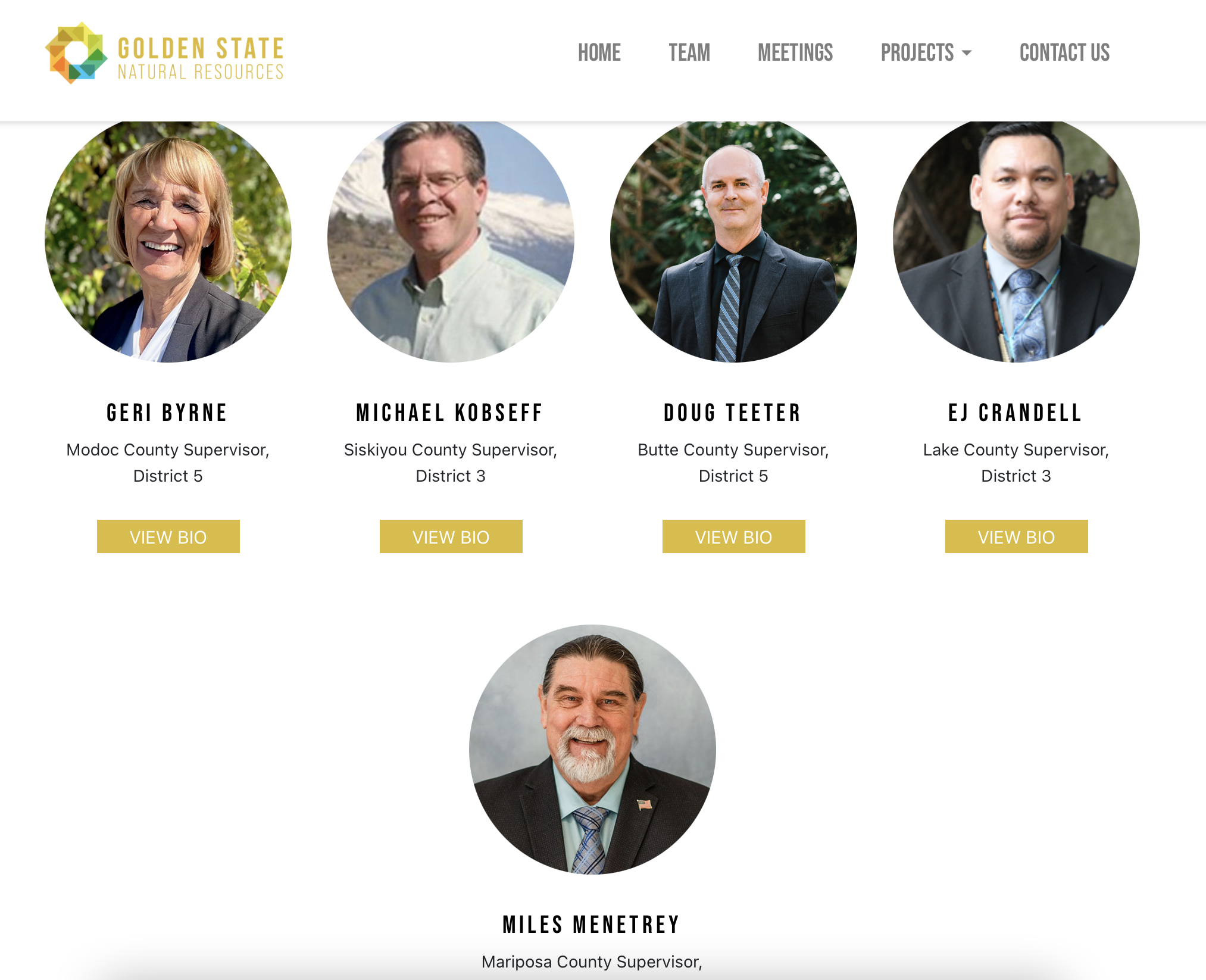
Kobseff sits on the board of Golden State Natural Resources, the organization behind the biomass project discussed above. GSNR identifies him as a member of its board, and its March 2025 records show him serving as vice chair and presiding over a board meeting. Kobseff is also Siskiyou County's representative to the Rural County Representatives of California, or RCRC, a county organization that "champions policies on behalf of California’s rural counties." His Siskiyou county biography lists forest management, fire prevention, water rights and fisheries recovery among his areas of interest.
That makes the GSNR story especially local. One of our own county supervisors has had a seat at the table of the organization whose project received those 5,500-plus public comments.
ARTICLE UPDATE 9.16.2026
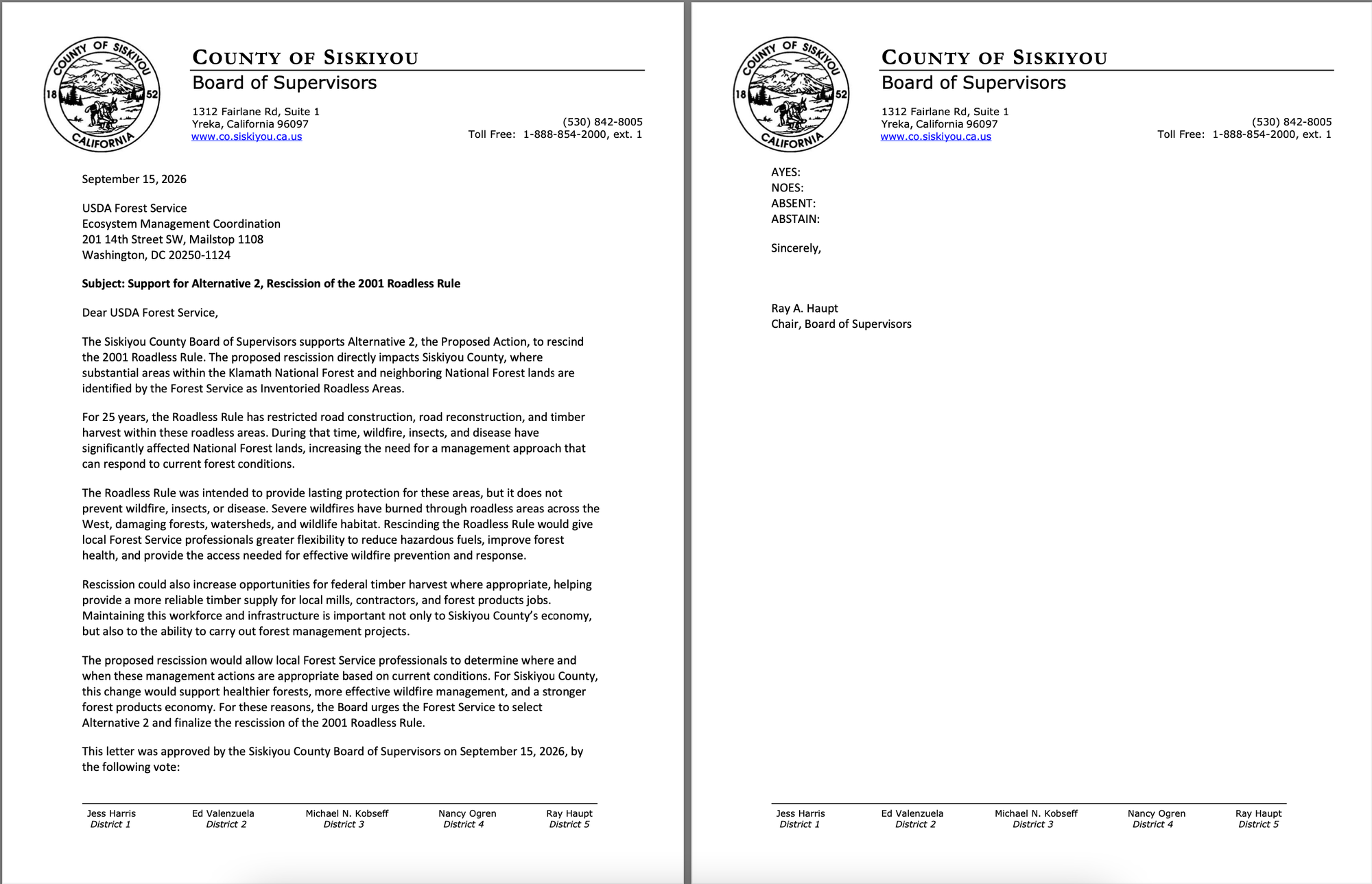
The Siskiyou County Board of Supervisors approved this letter to the USDA Forest Service at their September 15, 2025 meeting - supporting full Rescission of the "Roadless Rule." So clearly the County opinion is at odds with some local environmental groups and many citizens who want Roadless Rules in place to protect forests.
What’s All This Talk About “Forest Resilience”?
We’re hearing about resilience a lot: forest resilience, community resilience. The scaled down Golden State Natural Resources Forest Resiliency Demonstration Project. And of course: wildfire resilience.
There are very obvious reasons to make our communities safer from catastrophic fire. But locals have spoken loudly against forest extraction to feed a commercial industry that sends enormous amounts of local forest material overseas year after year. So when somebody says a project will improve “forest resilience,” Mount Shastans have learned to stay curious, and ask:
Which trees are coming out? How many? From where? Who gets the wood? Is somebody selling it? Will it be burned for energy? What happens to our watersheds and wildlife?
The Roadless Rule: What’s at Stake Here?
Since 2001, the federal Roadless Rule has generally restricted road construction, reconstruction and some timber harvesting in designated inventoried roadless areas of National Forest System lands.
The federal government is now proposing to rescind the nationwide rule.
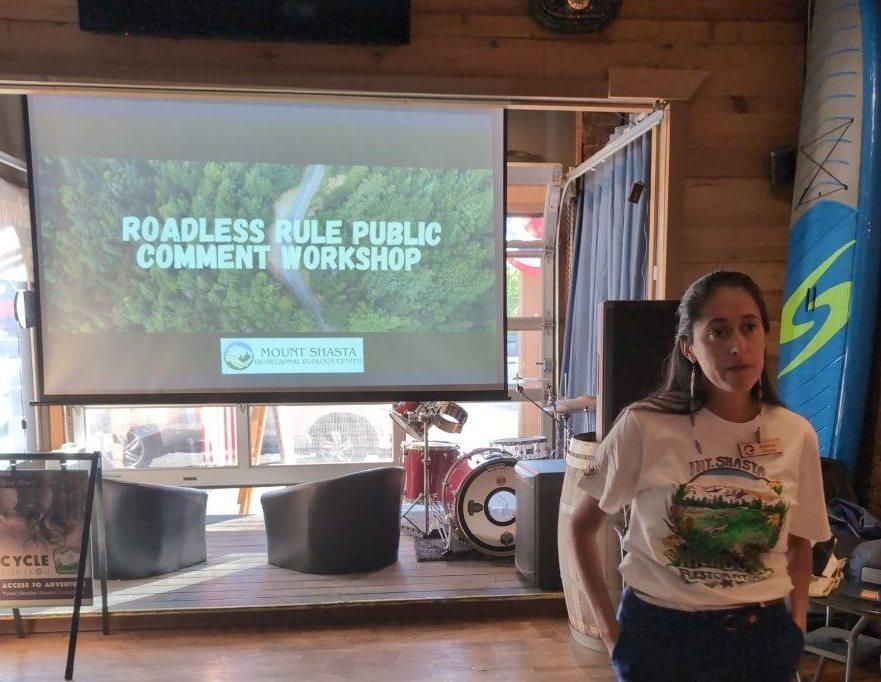
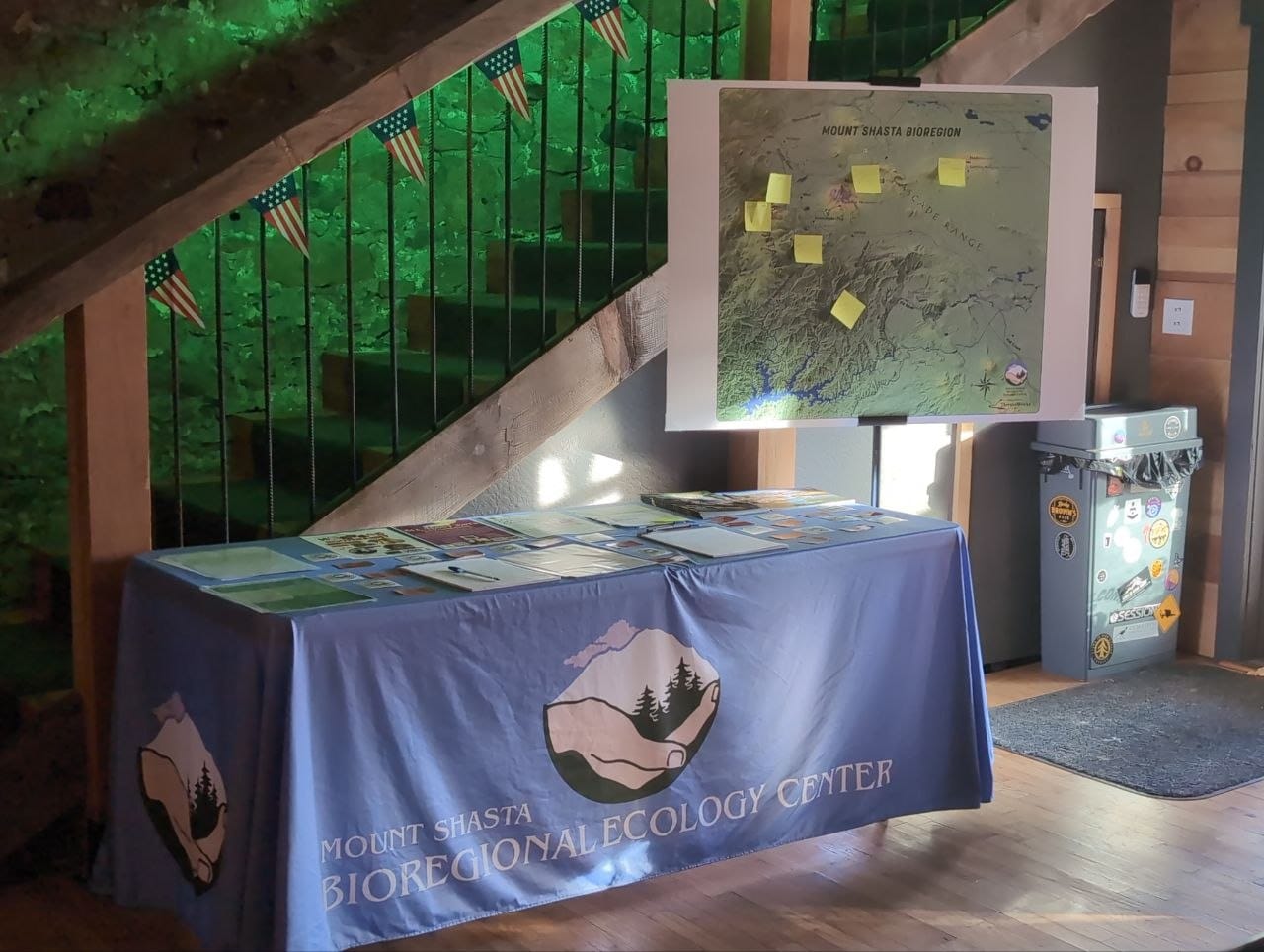
According to information presented by the Mount Shasta Bioregional Ecology Center at its September 12 public-comment workshop, roadless areas in our broader region include Mt. Eddy, Castle Crags, part of Castle Lake, parts of Mount Shasta, parts of Lassen National Forest and Mt. Hoffman. The Ecology Center brought community members together at the Mount Shasta Library and Deadwood Supply in Mount Shasta last week to learn about the proposal, discuss its possible consequences and—most importantly—learn how to participate in the federal public-comment process.
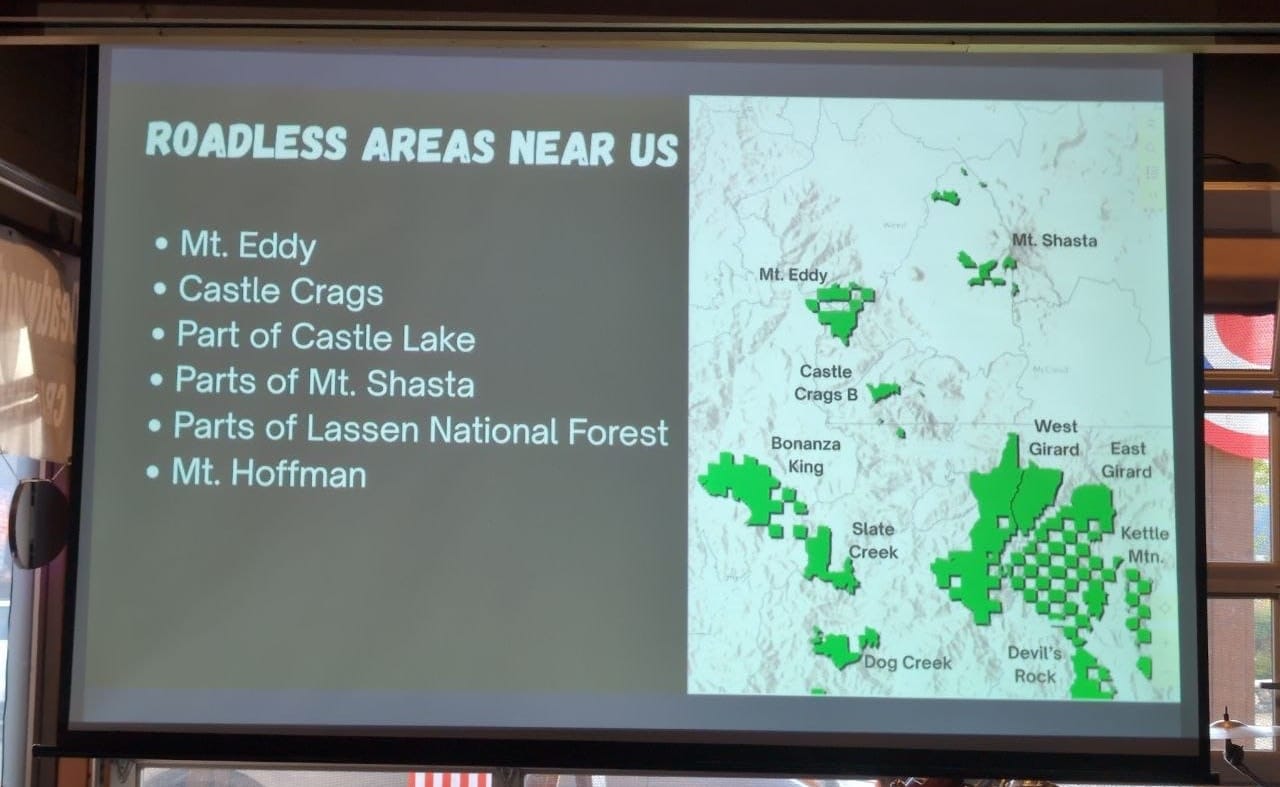
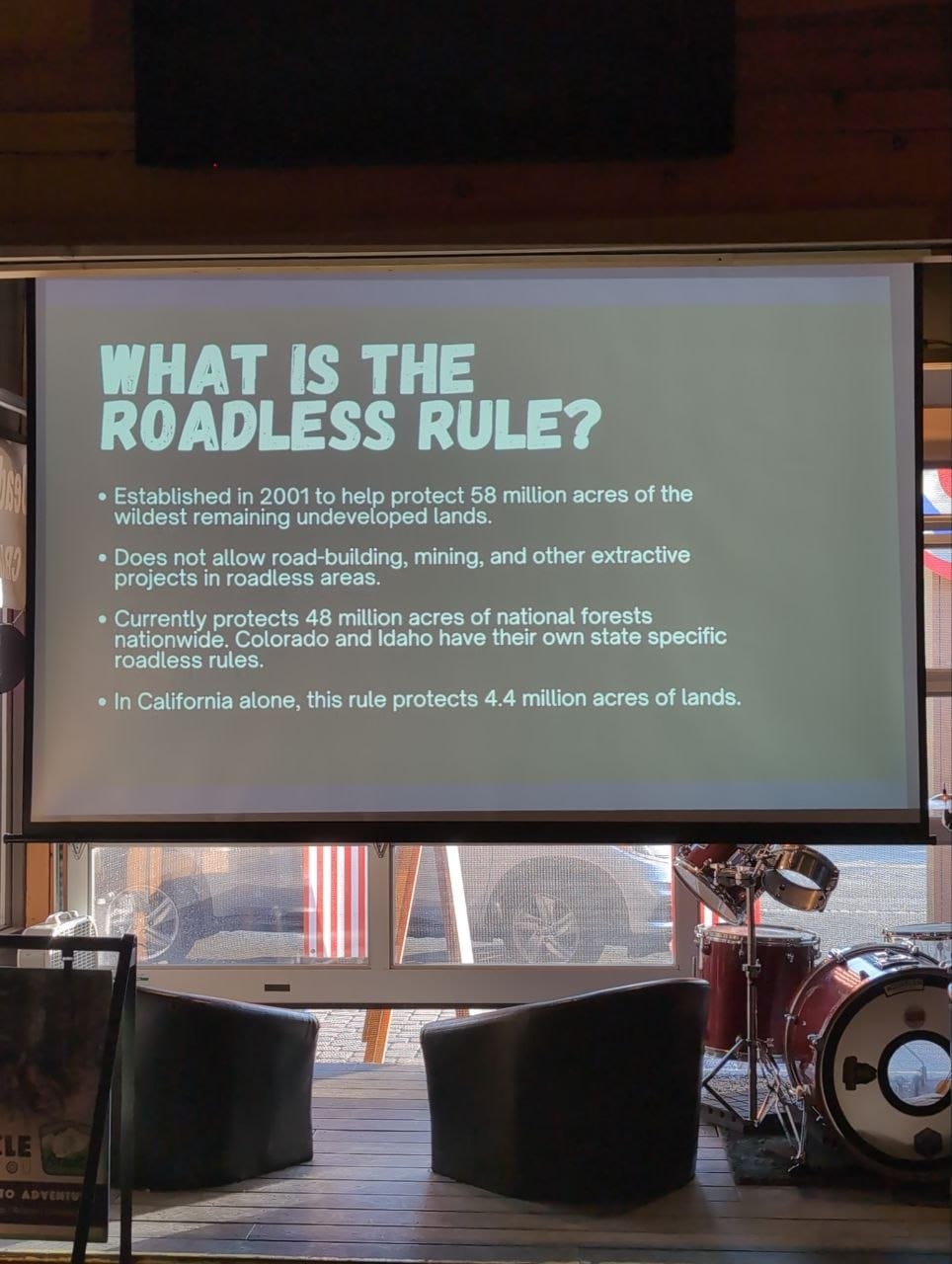
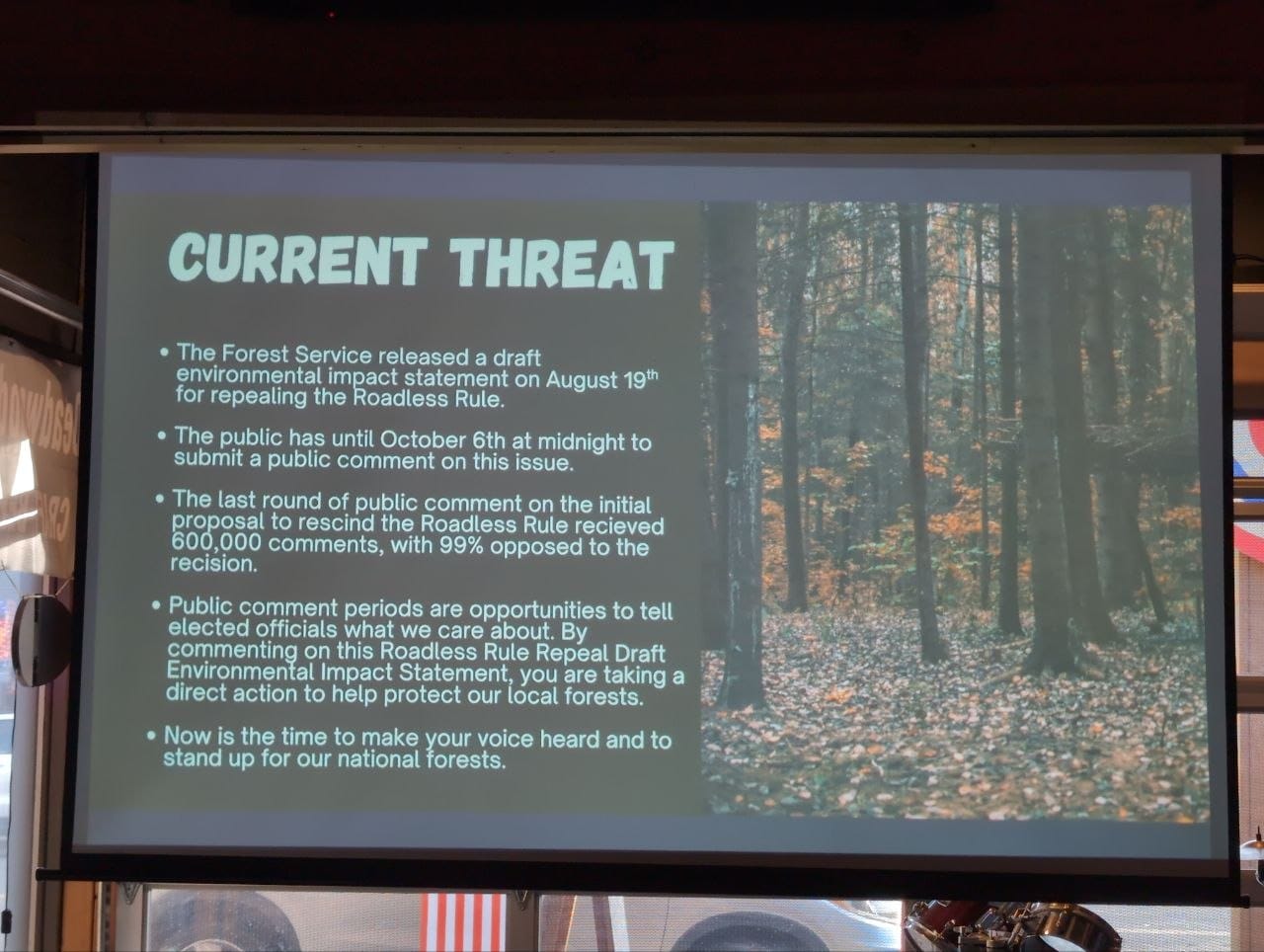
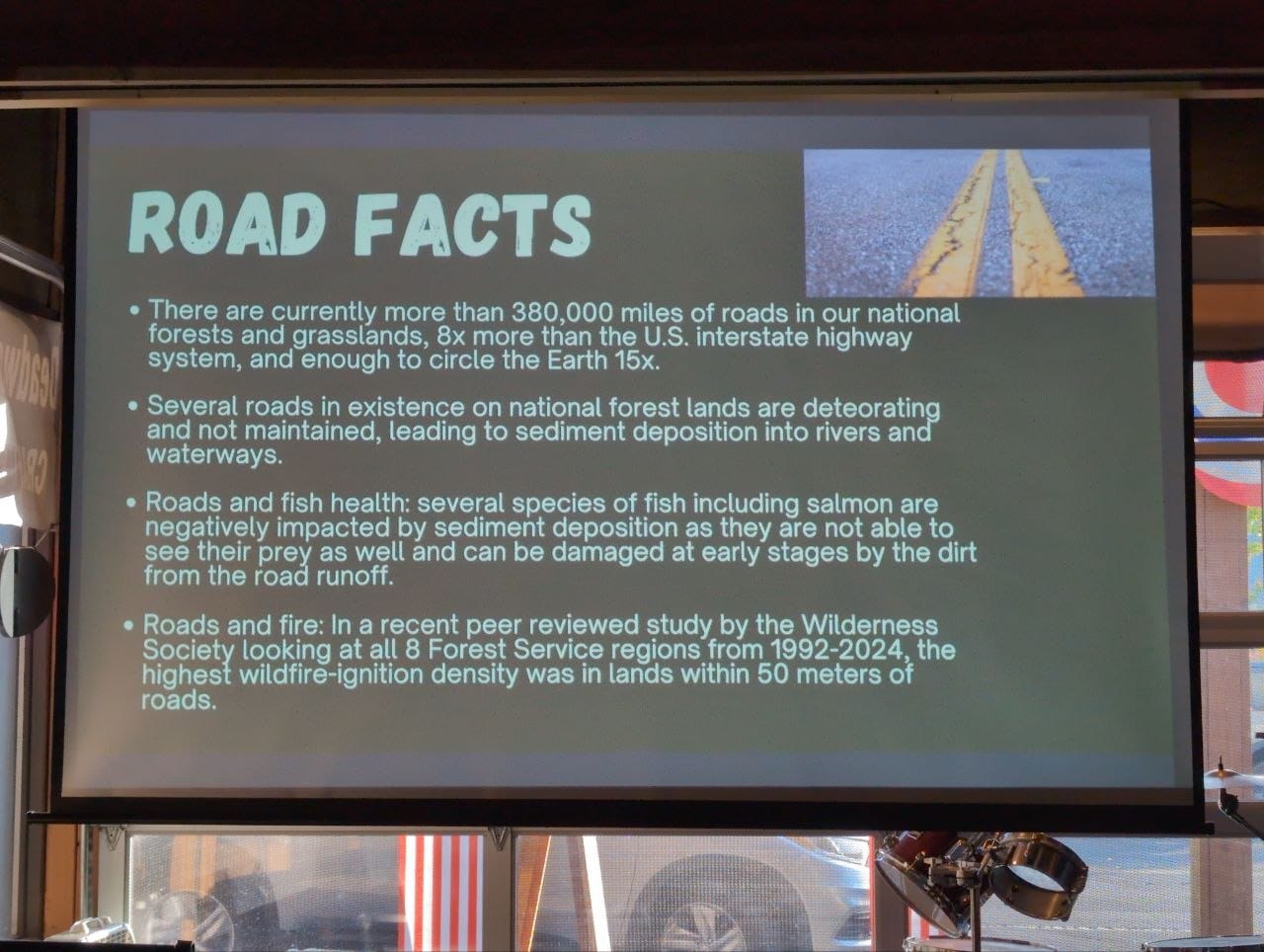
Slides provided by the Mount Shasta Bioregional Ecology Center
One U.S. Forest Service employee who attended the workshop made an emotional appeal:
“Stand in solidarity with our local forest teams; we are being dismantled from the inside under reorganization and struggling with federal funding cuts. We can’t even maintain current roads—why add more? If we set up the National Forest Service to fail and bring in corporate organizations to manage forests, it will cost three times as much!”
99% Were Previously Against Rescinding the Roadless Rule
More than 625,000 public submissions were submitted during the first public-comment period—and approximately 99% opposed. The Forest Service received more than 220,000 comment letters representing more than 625,000 submissions (when petition signatures are counted individually). According to the Forest Service's own Draft Environmental Impact Statement, approximately 99% were generally opposed to rescinding the rule, while approximately 1% supported it.
And yet the proposal moved forward. That's an important reminder that public participation matters—but simply counting comments isn't enough. Specific, substantive comments that identify places, impacts, and alternatives can become part of the administrative record the agency must consider.
Roadless doesn't mean “untouchable wilderness.” The 2001 Roadless Rule generally restricts new roads and timber cutting within designated Inventoried Roadless Areas, but it contains exceptions. The current debate is essentially over whether to:
Alternative 1: Keep those nationwide protections (no action)
Alternative 2: Full Rescission of the Roadless Rule
Alternative 3: "Rescindment Light," or to adopt some intermediate approach...or what one Ecology staffer called "a bone to mega-conservation big green groups."
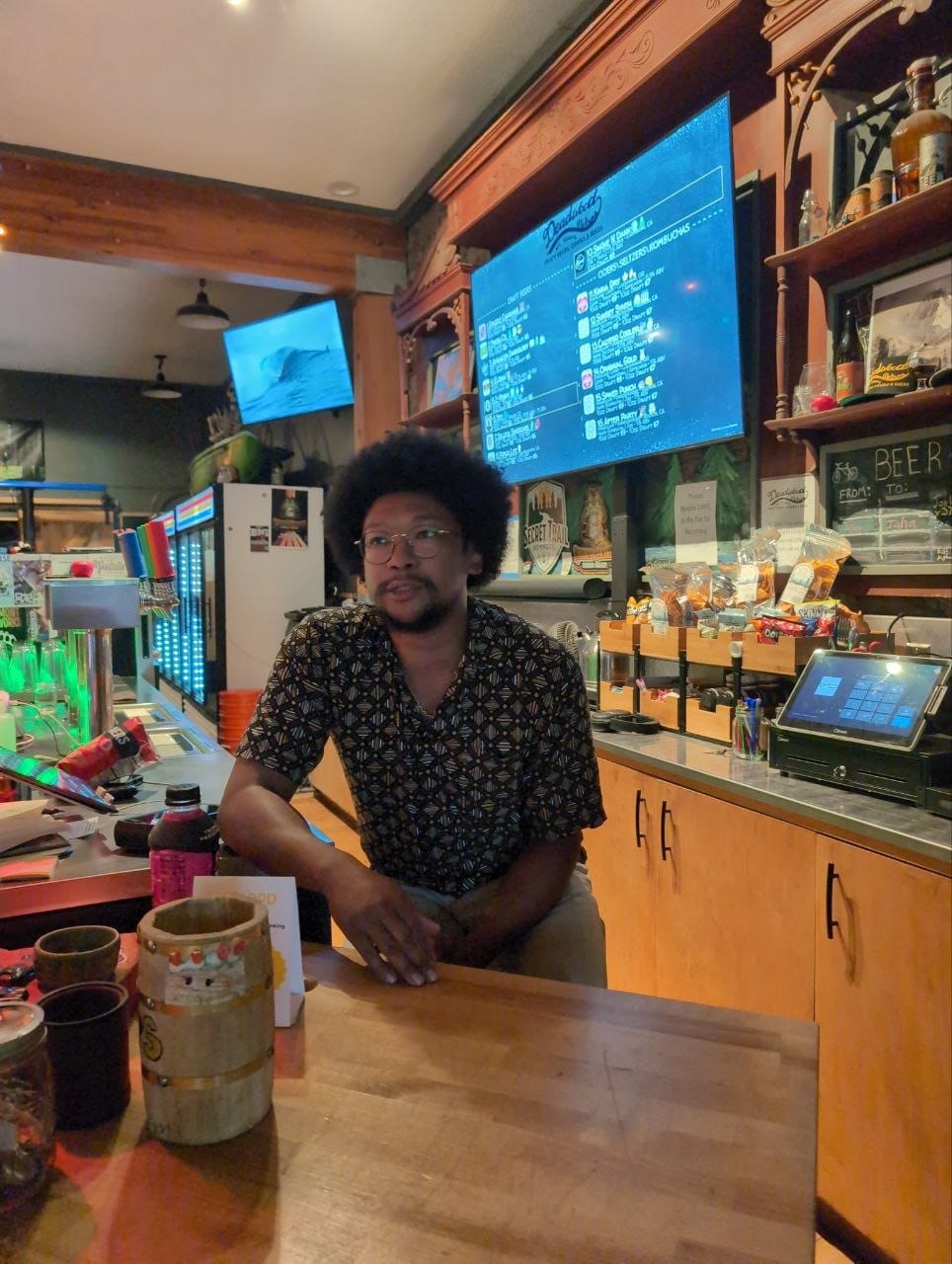
Other Voices From the Room
The Deadwood Supply discussion was lively, and not everyone approached the issue from exactly the same direction.
One attendee argued that rescinding the Roadless Rule would not simply “bring back the heyday of logging,” as the person had heard it was being portrayed, but could increase access for critical-mineral extraction in formerly protected areas.
Another disputed the idea that today’s large fires are simply the result of “unmanaged forests,” saying fires burn more easily across previously logged, poorly replanted lands.
One attendee went considerably further, calling the proposed change “an extremely corrupt cash grab.”
But not every comment favored keeping the rule. Another participant defended small landowners who want to cut timber on their own property and feel frustrated with government control that, in the participant’s view, lacks respect for land ownership rights.
Enviroskeptics: Another View of Environmental Stewardship
Not everyone who questions environmental regulation is arguing against protecting forests and water.
The Cornwall Alliance, an environmental-stewardship organization, offers a very different philosophy from many mainstream environmental groups. It argues that human beings can be active stewards of nature, and that responsible logging, resource use, private property, technology and economic development can sometimes improve both human welfare and environmental conditions.
Its Cornwall Declaration also argues that environmental decisions should consider the costs of regulation itself. It favors private-property stewardship and says collective environmental decisions, when necessary, should be made at the most local practical level.
That's worth considering in our own debate. A small landowner trying to remove trees, a forester trying to reduce hazardous fuels and a multinational corporation seeking access to local public resources are not necessarily the same thing.
BLUE Questioning Green?
We've had this argument before, over a decade ago.
The above-mentioned Cornwall Alliance promotes an independent movie called "BLUE" that features interviews with some longtime Siskiyou county activists: Marcia Armstrong, Debbie Bacigalupi, and Mark Baird.
Marcia Armstrong, then a Siskiyou County supervisor, argued for greater local control over natural-resource decisions and warned that federal environmental regulations were harming rural communities, agriculture and the timber economy.
Debbie Bacigalupi, a Siskiyou County rancher and property-rights activist, has spent years challenging environmental regulations she believes place excessive burdens on farmers, ranchers and rural communities. She remains active in those debates today, including California's controversial management of wolves in Siskiyou County.
Mark Baird, a Scott Valley rancher, former reserve sheriff's deputy and veteran air-tanker pilot, has long argued that federal forest restrictions have damaged both rural economies and effective forest management. He later became one of the leading figures in Northern California's State of Jefferson movement.
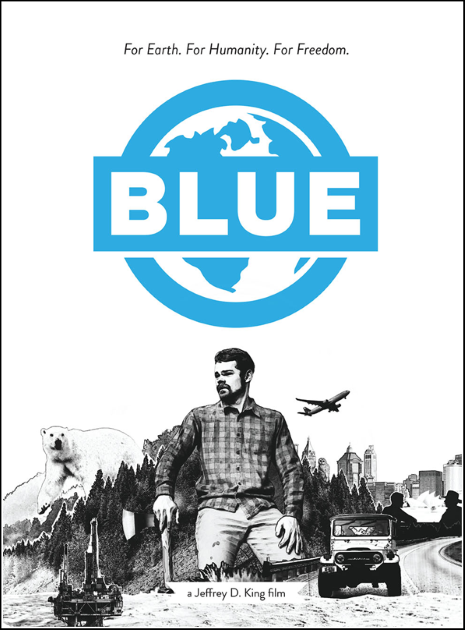
BLUE is more than a film, it’s an idea. Ideas have the power to change the way we think, begin movements, and even change the world. One of the most prominent idea of our time today is the Green Movement, which says that the Earth is threatened by the activity, even the existence, of mankind, and that the noble response is to restrict our freedom in order to save the planet. The movie BLUE challenges that idea. BLUE is an independently funded and filmed documentary by director, JD King.
BLUE argues that some leaders in the environmental movement are not sincere about protecting clean water, wildlife and forests – but rather have a covert agenda about government regulation, unchecked resource extraction and harmful control.
The film follows people in rural and forest communities who say environmental rules have hurt jobs, private property and traditional ways of life. It questions some claims about climate change and resource shortages and argues that people can use natural resources while still taking care of the environment.
For forests specifically, BLUE argues that logging and active forest management aren't necessarily bad for nature. It suggests that people who live and work in forests may sometimes understand how to care for them better than distant government agencies or environmental groups.
The film goes further by suggesting that some environmental policies are really about money, corruption and control, for example the globalist policies of "Agenda 21."
That perspective belongs in the conversation, too.
Interestingly, many on all sides of the issue are suspicious of corporately concentrated decision-making power.
People may disagree about where the greater danger lies: one side worries about corporations and development proceeding without adequate public/environmental scrutiny; the other worries about governments and environmental organizations gaining enough regulatory power to override local communities and landowners. When questions are posed simply, it seems that many locals may find themselves on the same side after all, asking:
Who should decide how our forests are managed—the people who live and work in them, federal land managers, environmental organizations, elected officials, private industry, Indigenous tribes, or some combination of all of them?
Here in Mount Shasta, that's not a theoretical question. We've already lived through it. And thankfully, community groups here remain engaged, active, and attentive towards finding solutions.
🌲 TAKE ACTION: ROADLESS RULE
COMMENTS DUE OCTOBER 6, 2026
Docket: FS-2025-0001
Information and workshop materials credited to the Mount Shasta Bioregional Ecology Center.
Click the green button above, or go to Regulations.gov and search for FS-2025-0001.
Open the Roadless Rule docket and select the option to submit a comment.
You can type your comment directly into the form or attach it as a document. Creating a document to cut and paste may be more reliable, and you can add images.
How to Write an Effective Public Comment
One of the most useful messages from the Ecology Center workshop was that you do not need to be a lawyer or scientist to make a meaningful public comment.
Tell the Forest Service why the place matters to you. If you hike, fish, hunt, camp, bike, backpack, swim, walk your dog, kayak or simply spend time in these forests, say so.
Talk about the things you care about: clean water, healthy watersheds, wildlife habitat, fire risk, recreation or what these forests will look like for future generations.
Most importantly, be specific. Name the creek, trail, ridge, roadless area, habitat or other place you know. Explain what you have observed and what you are concerned could change.
The federal government is accepting comments on the proposed Roadless Rule rescission under Docket FS-2025-0001. The current deadline is October 6, 2026.
However you do it, you DO need to tell the Forest Service what matters to you—and why.
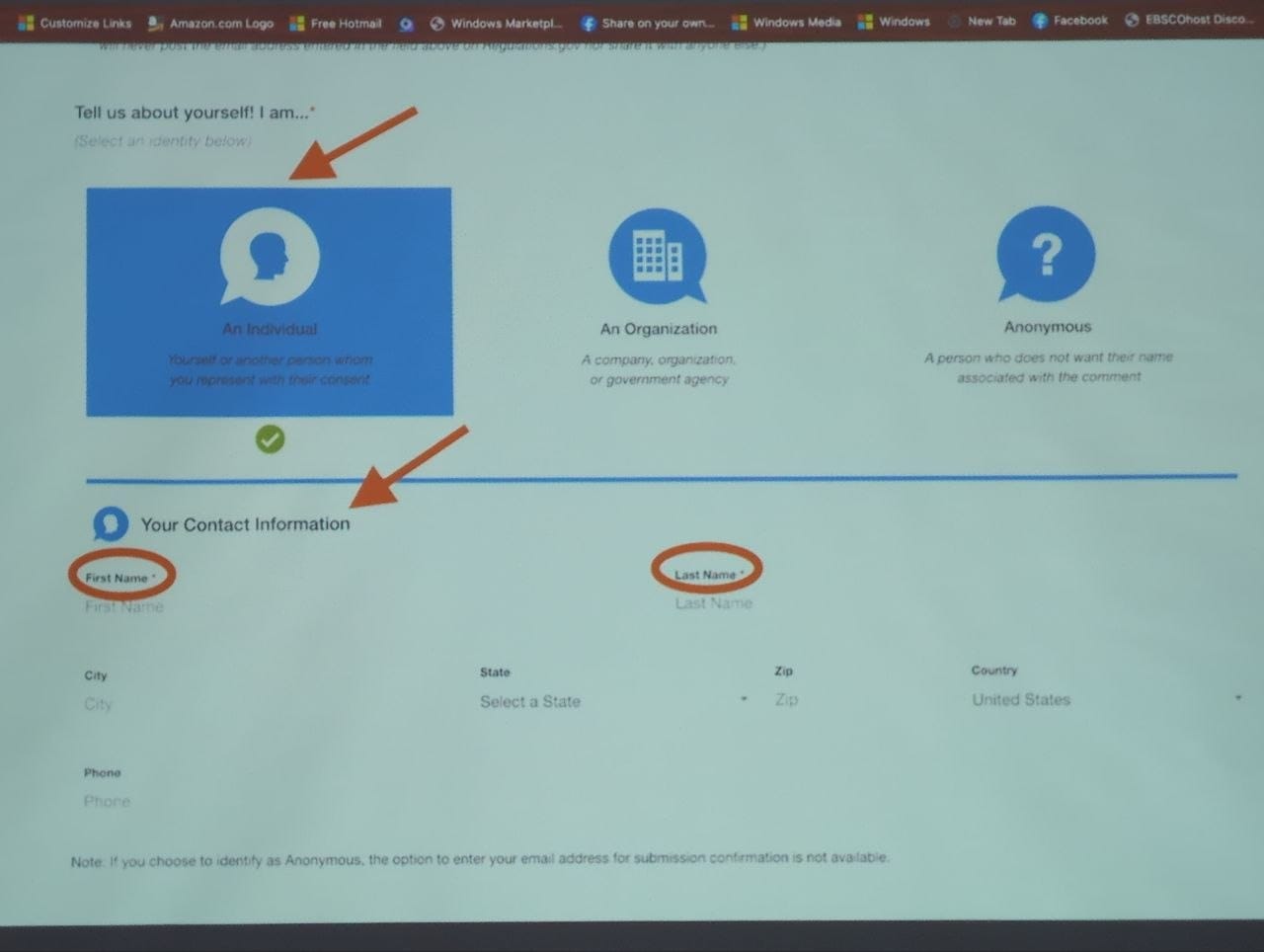
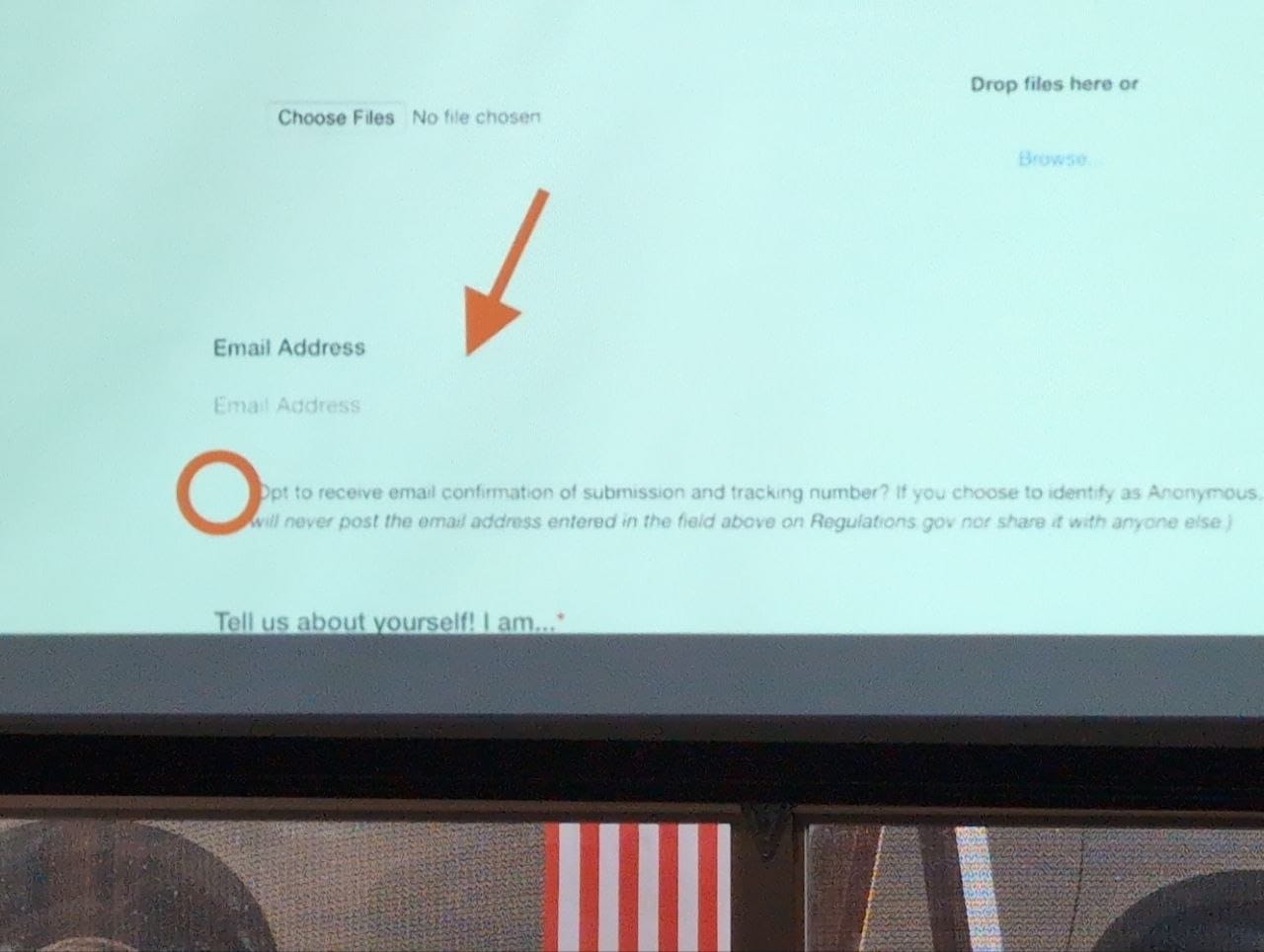
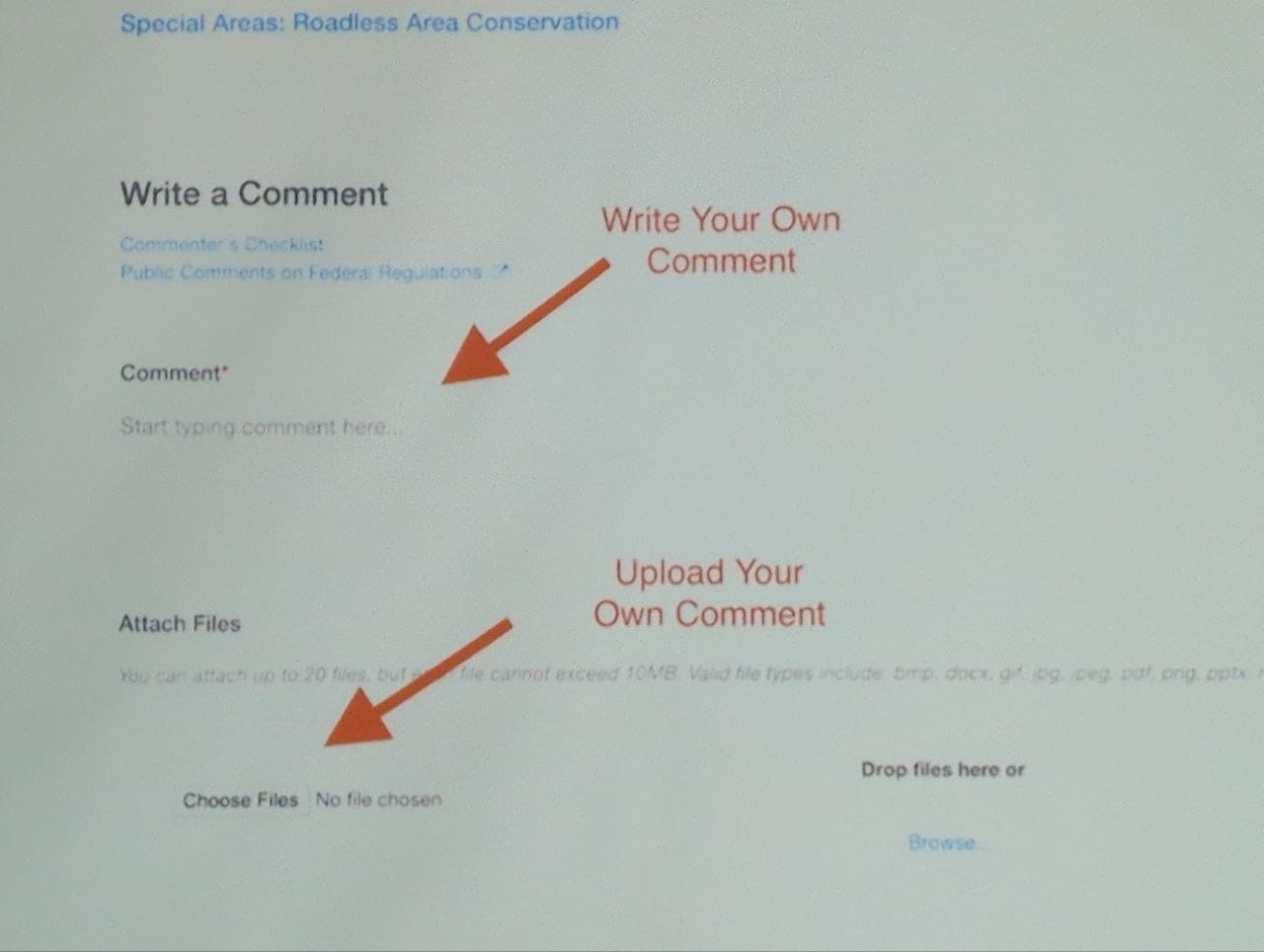
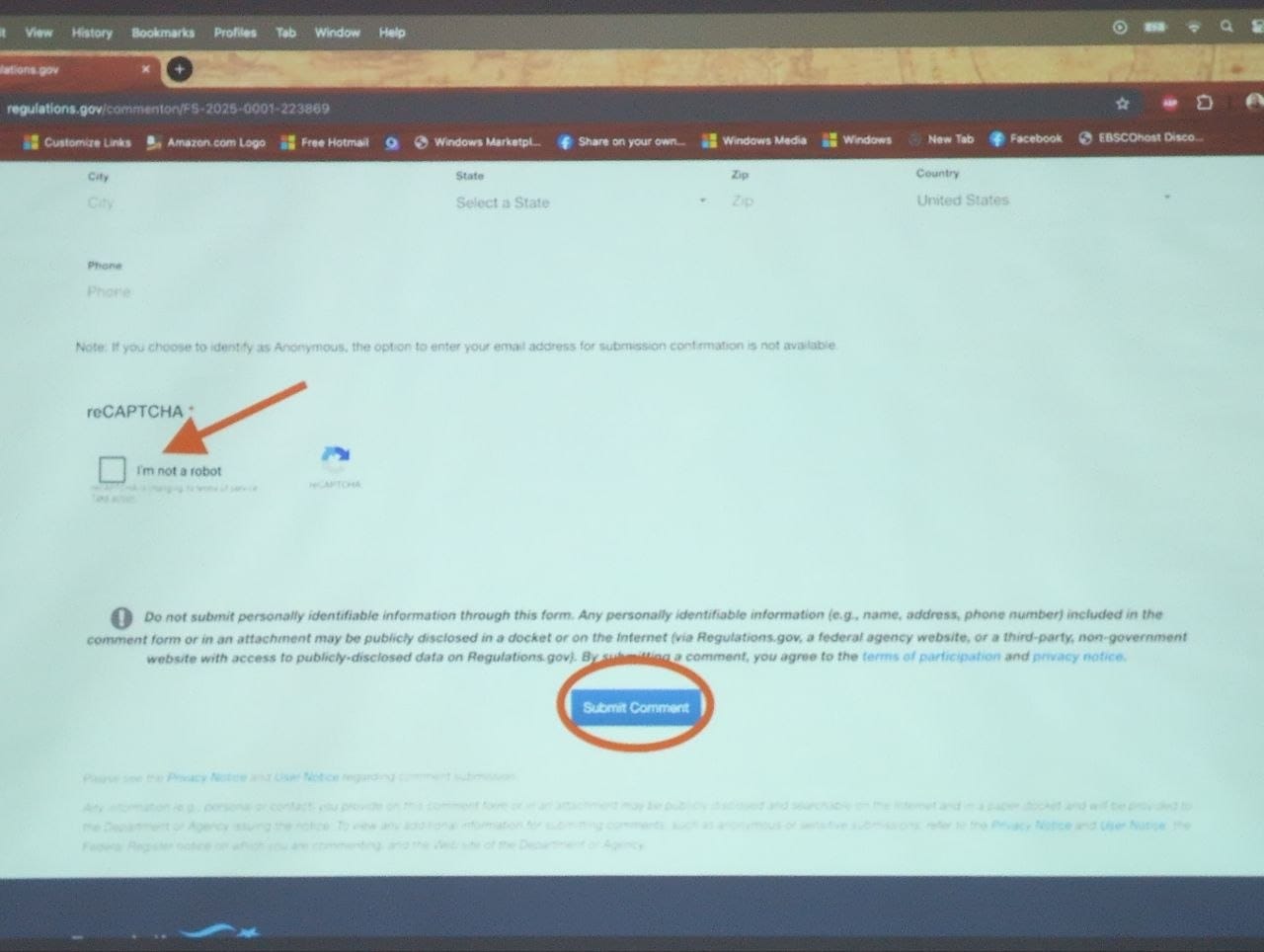
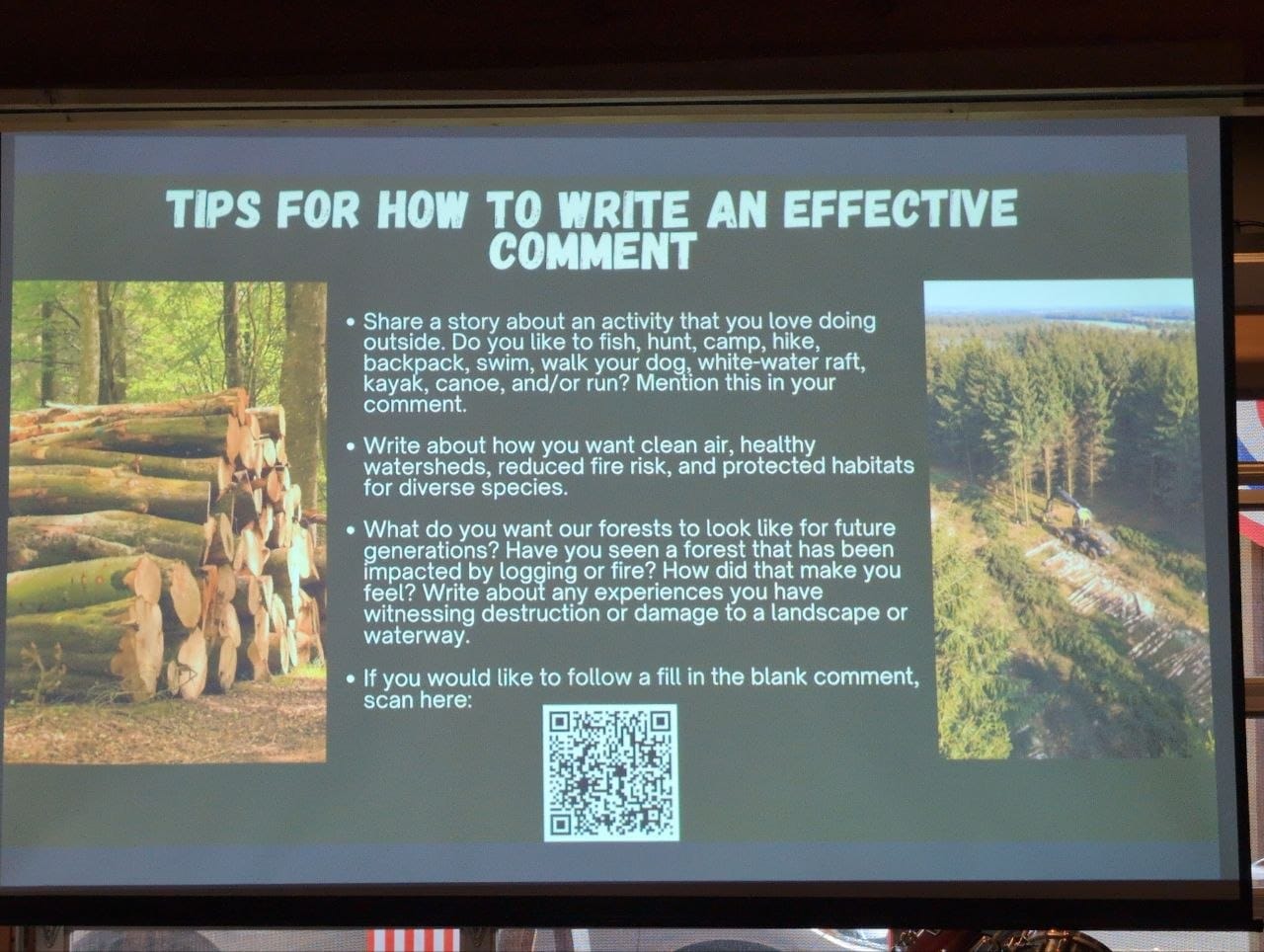
Mount Shasta Bioregional Ecology Center slides

*Supporting Mount Shasta Bioregional Ecology Center Executive Director Bianca Garza in the public comments discussion were fellow staff Nick Joslin, Policy and Advocacy Director; Tara Gardner, and Bryan Pride, along with Walter “Redgie” Collins, Esq., Vice President of Legal and Government Affairs for California Trout.
Author's Note:
At time of publication, this comment was sent in by a Mount Shasta resident, with a warning about ongoing efforts towards mega-biomass plants subsidized and functioning in Siskiyou County. The following represents the commenter's interpretation of the legislation; readers can review the linked bill text below. Including as a footnote for readers' further exploration.
THE FIX OUR FORESTS ACT
────────────────────────────────────────────────── 279–141 (House Vote) │ H.R. 471 (House Bill) │ S. 1462 (Senate Bill) The Fix Our Forests Act — House Resolution four seventy one and Senate bill fourteen sixty two — is marketed as wildfire prevention. Beneath that framing, it fundamentally weakens the legal tools communities have used for decades to protect forests, air, water, and wildlife. The bill passed the House two hundred seventy nine to one hundred forty one in January twenty twenty five and is now in the Senate. Here is what it actually does:
Section one oh six expands categorical exclusions to ten thousand acres per project — fifteen point six square miles — with no environmental review, no public comment, and no analysis of alternatives.
Section one twenty one slashes your lawsuit window from six years to one hundred fifty days, a ninety three percent reduction. It also rewrites injunction standards so trees come down while cases are being heard.
Section one twenty two overturns the Cottonwood ruling, meaning the Forest Service no longer has to update management plans when new endangered species habitat is discovered. And twenty year stewardship contracts lock private corporations into guaranteed access to public forests for two decades.
This is not a minor regulatory adjustment. This is the legal architecture that enables industrial scale biomass extraction from your public forests. Every road closure, every logging truck, every gated trailhead traces back to this bill.
SOURCES ─
1. H.R. 471 — Full Bill Text (Congress.gov) https://www.congress.gov/bill/119th-congress/house-bill/471
2. Fix Our Forests Act — XML Text (GovInfo) https://www.govinfo.gov/content/pkg/BILLS-119hr471ih/xml/BILLS-119hr471ih.xml
3. S. 1462 — Senate Companion (Support Book) https://www.padilla.senate.gov/wp-content/uploads/FOFA-Support-Book_National-Groups_.pdf
4. FOFA Detailed Analysis — H.R. 471 PDF https://valadao.house.gov/UploadedFiles/Fix_Our_Forests_Act.pdf ─ EXPLORE ─ → NEPA Limits: Section 106 CE expansion → Legal Rights: 6 years → 150 days → Losing Access: Forest becomes supply chain → Bill Status: Senate vote pending
🌲TAKE ACTION: FIX OUR FORESTS ACT
H.R. 471 — the Fix Our Forests Act — has passed the U.S. House and is now awaiting action in the Senate. The bill is intended to speed forest restoration and wildfire-risk reduction, but critics are concerned that some provisions could reduce environmental review and make large-scale logging projects easier to approve. A Senate Agriculture subcommittee held a hearing on the bill in March 2025.
California residents can contact U.S. Senators Alex Padilla and Adam Schiff now. Tell them what you think about the Fix Our Forests Act and, importantly, why it matters to you here in Northern California.
Write Senator Alex Padilla
Write Senator Adam Schiff
Siskiyou County's U.S. Representative is James Gallagher, who was sworn in on June 9, 2026 to represent California's 1st Congressional District. Because the House has already voted on H.R. 471, you can still contact his office about the bill and any future House action or changes that return from the Senate.
Find and contact your U.S. Representative
What should I say? Keep it simple. Tell them whether you support, oppose, or want changes to H.R. 471. Explain your connection to Northern California's forests. Ask specifically how the legislation would affect environmental review, roadless areas, logging, wildfire prevention and public participation.
Personal comments matter. A short message explaining why Mount Shasta, the Klamath National Forest or another place matters to you can be more meaningful than simply copying a form letter.
Comments ()